Mysids and Moray
Updated: Sep 25
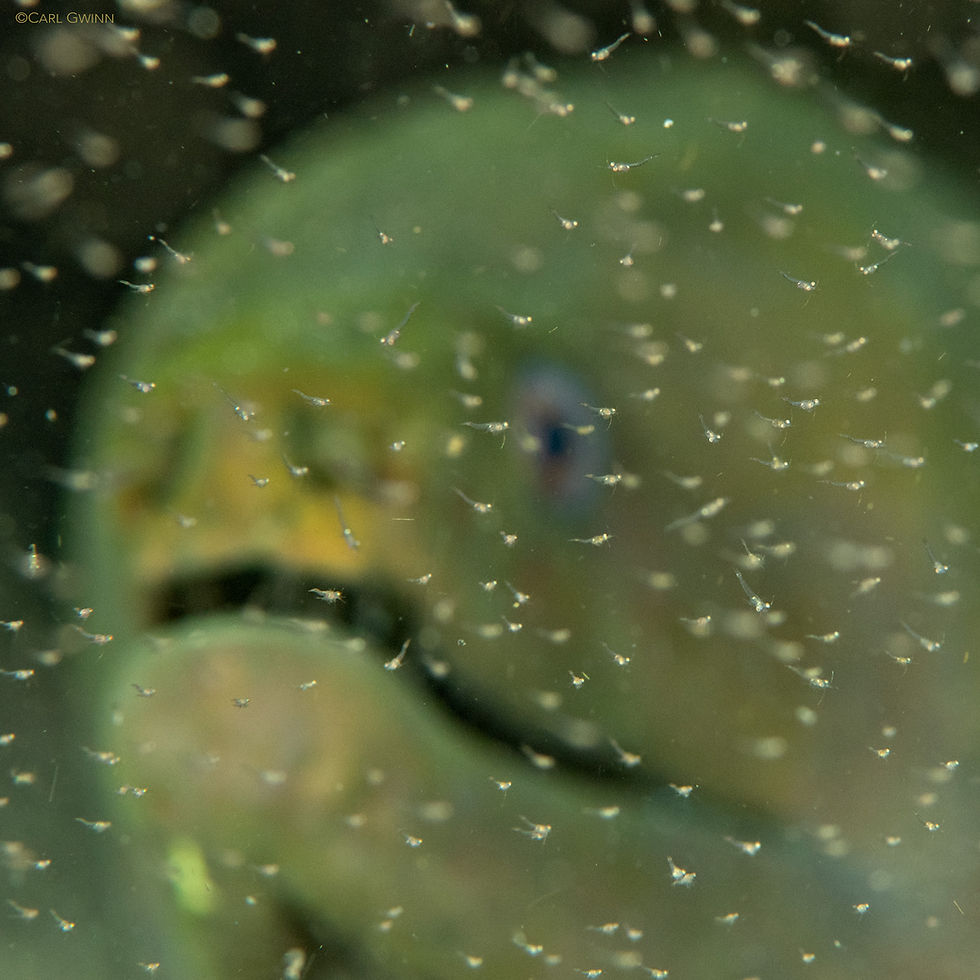
Mysid shrimp live in salt and fresh water throughout the world, at all temperatures. These were in the Sea of Cortez, in the Bahia de los Angeles, in water at 87F. The females carry their larvae offspring in pouches, giving them the name "opossum shrimp". Like their second cousins, krill, they are filter feeders on even smaller creatures, and are an important food source for larger, but still small, fish and invertebrates. Frozen mysids are often used as food for fish or anemones in aquariums. Although krill oil is sold as a super-healthy supplement, I have no idea what mysids taste like. Mysids have kind of a bad rap among underwater photographers because they usually blur the image. I'd kinda like to set up an underwater microscope and photograph individual mysids--but life is too short to do everything.
Morays are pretty common in the Sea of Cortez. Most that I have seen are Panamic Green Morays, aka Chestnut Morays. They make good photo subjects because they have spectacular teeth and aren't afraid of divers. Usually they are quite mellow with visiting photographers, although if harrassed enough they will fight back. They're a few steps up the food chain from mysids, feeding on fish and octopi; they will apparently eat just about anything that they can get into their mouths. As my dive buddy remarked, once you get into that mouth there's only one way out.
The ancient Romans loved morays and kept them in large saltwater fish ponds next to their villas. Most of those morays were intended for eating, although some were beloved pets--in fact, Caesar Augustus' niece adorned her favorite moray with gold jewelry. Nowadays morays are not considered edible, because they are among the predatory fish that can cause ciguatera poisoning. The ciguatera toxin is created by tiny one-celled reef dwelling organisms (Gambierdiscus toxicus); the toxin is concentrated as it is passed up the food chain. Symptoms include diarrhea, vomiting, numbness, dizziness, and so on. I don't know of any reports about what the Romans thought of this. Was the taste of moray worth it, or was ciguatera not around in those days?


Comments